Retrofit is one of the most oversold words in commercial HVAC. Plenty of contractors will tell you your building needs a major upgrade before they have even looked at your equipment. We take a different view. A retrofit is a great investment when it solves a real...
The AIM Act is the biggest change to refrigerant regulation in decades, and if you own or manage a commercial building, it affects your HVAC systems in three distinct ways. The headlines tend to focus on refrigerant bans, but the fuller picture matters more for...
When it comes to commercial HVAC design, one of the most important steps happens long before equipment is installed. Before selecting rooftop units, designing ductwork, or configuring building controls, HVAC professionals must first determine how much heating and...
When designing a commercial HVAC system, selecting the right equipment is only part of the equation. Even the most advanced heating and cooling system can struggle to deliver comfort and efficiency if it isn’t properly designed from the ground up. That’s...
Indoor air quality (IAQ) has become a growing priority for commercial building owners, facility managers, and occupants alike. While temperature control is often the most visible function of an HVAC system, the quality of the air moving through that system plays an...
For many commercial buildings, energy costs are one of the largest ongoing operating expenses. From office buildings and retail centers to industrial facilities and healthcare environments, HVAC systems consume a significant amount of energy every day to maintain...
Commercial HVAC systems are designed to provide years of reliable heating, cooling, and ventilation for offices, retail centers, industrial facilities, healthcare environments, and other commercial properties. But even well-maintained systems naturally lose efficiency...
Uneven temperatures, rising energy bills, and constant HVAC run times are common signs that your commercial HVAC system may need air balancing. In many buildings, the issue isn’t the equipment itself but how air is distributed. Identifying airflow imbalances early can...
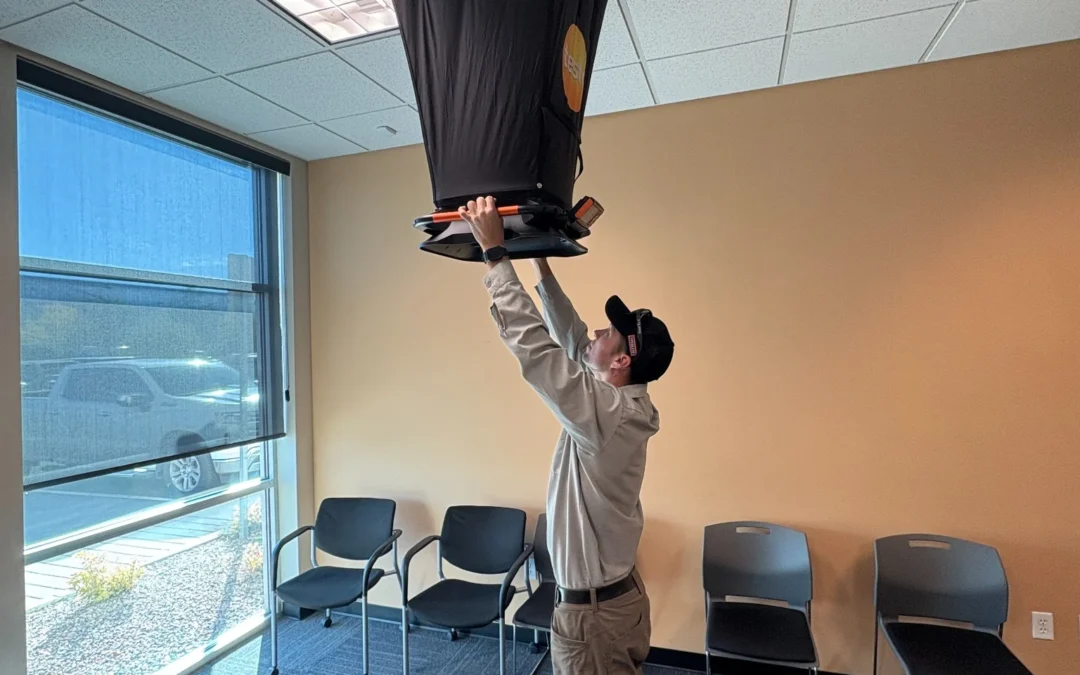
Air balancing in commercial HVAC is the process of testing and adjusting airflow to ensure each area of a building receives the correct amount of conditioned air. Without proper air balancing, commercial HVAC systems can develop uneven temperatures, reduced...
Commercial HVAC systems should typically be balanced every 3 to 5 years, but factors like building modifications, equipment wear, and occupancy changes can require more frequent adjustments. Over time, airflow in commercial HVAC systems naturally shifts, leading to...