
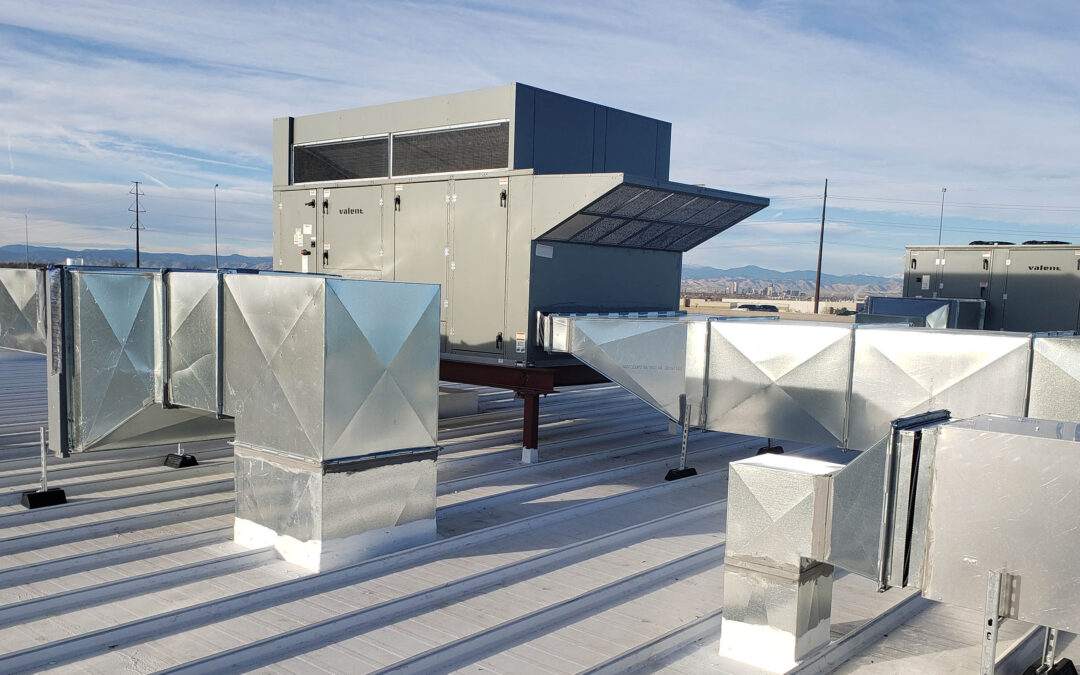
Your rooftop unit trips a fault code on a July afternoon. The tech checks the compressor. He mentions the AIM Act before he even opens the electrical panel. He says R-410A is basically illegal now, and the only fix is a full replacement.
You have not heard any of this before today. Now you wonder if every rooftop unit on your building needs to go. You wonder if you even have a choice.
This happens more often than it should. The regulation behind it is real. Much of what gets said about it in the field is not.
Quick answer: This federal law does not ban servicing existing R-410A or R-22 rooftop units. It restricts what refrigerants go into newly manufactured gear, starting with comfort-cooling chillers in 2024 and rooftop units and split systems in 2025. You can still repair, recharge, and maintain the units already installed on your roof. Replacement only makes sense when the math supports it, not because a rule requires it.
What’s inside
- What the Federal Refrigerant Law Actually Requires for Commercial Rooftop Units
- Is It Illegal to Service R-410A or R-22 Units Right Now?
- What the Leak-Threshold Math Means for Your Building
- Repair or Replace: The Real Cost Math Behind Compliance Decisions
- Your Decision: Compliance Is Management, Not Mandatory Replacement
What the Federal Refrigerant Law Actually Requires for Commercial Rooftop Units
This law runs three separate programs. Only one of them touches what you can install new after 2025.
This law is formally called the American Innovation and Manufacturing Act. It gives the Environmental Protection Agency (EPA) authority over hydrofluorocarbons (HFCs) across the United States. HFCs are the chemical compounds used in most commercial air conditioning and refrigeration systems, such as R-410A. They trap heat far more efficiently than carbon dioxide. Scientists measure that heat-trapping power on a scale called Global Warming Potential (GWP). That scale is why the law targets HFCs as part of the country’s broader climate goals.
Three Programs: Phasedown, Technology Transition, and Management
EPA splits its authority into three lanes. A phasedown lowers HFC production and consumption over time. A technology transition limits what refrigerants go into new gear. A management program covers leaks and recordkeeping. Each lane affects buildings differently.
The phasedown controls national supply. The technology transition controls new-equipment sales. The management rules control how you operate the systems you already own.
The 2025 Deadline Applies to New Gear, Not Existing Units
Here is where most confusion starts. EPA restricts R-410A in new rooftop units and split systems starting January 1, 2025, per the Carrier technical bulletin. That date applies to newly manufactured gear. It does not apply to the unit already bolted to your roof.
Picture a facility manager reading a headline about a 2025 “refrigerant ban.” She assumes her five-year-old rooftop unit is suddenly out of compliance. It is not. There is no requirement to convert or replace existing commercial chillers, rooftops, splits, or VRF systems under current rules, per that same bulletin.
Key Numbers Behind the Phasedown Schedule
The phasedown targets an 85% cut in hydrofluorocarbon (HFC) production and consumption by 2036. That target is measured against 2011-2013 baseline levels, per EPA. As of 2024, the cap already sits at 60% of that baseline. It drops to 30% by 2029.
That schedule matters for budgeting supply costs over time. It does not make your current units illegal to run.
Pro tip: The roughly 700 GWP ceiling EPA is moving new gear toward applies only to units built after the transition date. It never applies to systems already installed and running.
Is It Illegal to Service R-410A or R-22 Units Right Now?
No. Servicing, recharging, and repairing existing R-410A and R-22 units remains fully legal. Only the manufacture and sale of new air conditioning and refrigeration gear using restricted HFCs is limited.
Five Facts vs. Myths About the Refrigerant Rule Change
- Myth: R-410A is banned outright. Fact: R-410A is restricted only in newly manufactured comfort-cooling gear, not in service or recharge of existing units.
- Myth: Every rooftop unit must be retrofitted by 2025. Fact: there is no retrofit mandate for existing rooftops, splits, chillers, or VRF systems, per the Carrier bulletin.
- Myth: You cannot buy R-410A anymore. Fact: reclaimed and back-inventory supply can still be sold and used to service units for years after the manufacturing cutoff.
- Myth: The law mainly bans chemicals. Fact: a large part of it focuses on reclamation, recovering and reusing HFCs already in circulation instead of releasing them.
- Myth: Compliance requires buying new gear. Fact: for most buildings, compliance is proper leak management and recordkeeping, not a purchase order.
Why Some Contractors Push Retrofits You Do Not Need
Picture a contractor telling you your unit “can’t legally be serviced anymore.” That claim is rarely true, and it should raise a flag.
Some contractors have a business reason to describe this rule as stricter than it is. Selling new gear pays better than approving a repair. Calling an aging but functional rooftop unit “non-compliant” is an easy way to justify a sale your budget did not plan for this year.
This is where a retrofit, meaning a modification to run a different refrigerant in existing gear, gets offered as urgent when it is optional. The same goes for full replacement quotes framed as legally required rather than operationally recommended.
What Is Still Allowed Through 2026
Gear using higher-GWP HFCs made before January 1, 2025 can still be installed through January 1, 2026, according to industry compliance summaries tracking the phase-in timeline. That grace period matters for capital planning, especially for owners mid-project on new rooftop installs.
Reclaimed HFC supply, recovered from decommissioned units and reprocessed to spec, remains a legitimate and growing source for servicing older systems well past the manufacturing cutoff.
Pro tip: Ask any contractor pushing full replacement to name the exact EPA rule section that bans service on your existing unit. If they cannot name one, it is a sales position, not a regulatory requirement.
What the Leak-Threshold Math Means for Your Building
EPA’s leak rules only apply above specific charge sizes. Most smaller commercial units fall well under the thresholds that trigger the heaviest requirements.
The 15-Pound Threshold That Triggers Leak Repair Math
EPA’s HFC management rule has a clear trigger. It applies to any unit with 15 pounds or more of a high-GWP refrigerant, meaning a GWP above 53. That threshold triggers a leak rate calculation every time you add refrigerant, per Hunton Andrews Kurth’s regulatory update. R-410A carries a GWP around 2,088, so it clears that bar easily.
This captures most commercial chillers, refrigeration racks, and many larger rooftop systems. It does not mean every small split system in a strip mall needs a compliance file.
Automatic Leak Detection: Who Actually Needs It
Automatic leak detection, fixed monitoring gear that continuously samples the air for leaks, becomes mandatory for industrial process refrigeration and commercial refrigeration systems carrying 1,500 pounds of charge or more. New installs need it by January 1, 2026. Existing systems have until January 1, 2027.
Picture two setups on the same campus. A 3-ton rooftop unit serves a small office suite. A 40-ton central plant chiller serves a hospital wing. The rooftop unit will almost never approach the 1,500-pound threshold. The chiller very well might. That is where automatic leak detection budgeting belongs.
Recordkeeping EPA Expects You to Keep
Every addition above the 15-pound threshold needs a documented leak rate calculation. If that rate exceeds allowable limits, repair or retrofit timelines kick in, often within 30 days of confirming the leak.
For a facility running several qualifying systems, this becomes a formal recordkeeping program. It is not just a folder of loose service tickets.
Pro tip: Civil penalties for HFC management violations can reach $44,539 per day per violation. Consistent documentation costs far less than a gap in your records.
Repair or Replace: The Real Cost Math Behind Compliance Decisions
Compliance rarely decides the repair or replace question on its own. Age, failure type, and remaining service life usually decide it. The numbers can go either way.
The Line Items Behind a Compressor Repair vs. a Full Replacement
Consider a 15-year-old rooftop unit with a failed compressor. A compressor repair covers labor, a recharge, and diagnostic time. It typically costs a fraction of a full swap. A full unit replacement adds crane costs, curb adapters, and new controls. That pushes the price several times higher than the repair alone.
| Decision Factor | Repair Usually Makes Sense | Replacement Usually Makes Sense |
| Unit age | Under 20 years | 25 to 30 years or more |
| Charge size | Under 50 pounds, single failure | 50 pounds or more, repeat leaks |
| Leak rate | Isolated fault, low annual loss | Losing more than 20% of charge per year |
| Service history | First major failure | Multiple failures in a short window |
These thresholds are general planning guidelines drawn from industry rules of thumb, not a diagnosis for a specific unit.
When a 15-Year-Old Unit Still Makes Sense to Repair
Typical rooftop lifespan runs 15 to 20 years with proper maintenance. A unit at year 15 with one failed part still has runway left, assuming the rest of it checks out during inspection.
Picture a building with two identical rooftop units installed the same year. One develops a compressor fault and passes inspection everywhere else. The other has a cracked heat exchanger, a corroded cabinet, and a history of repeat service calls. The first gets repaired. The second gets replaced. Same building, same install date, different decision, because the underlying condition differs.
When Replacement Actually Makes Sense
Replacement earns its cost when a unit is pushing 25 to 30 years old. It also earns its cost when a major structural or electrical part fails alongside the refrigerant circuit, or when the same unit racks up repeat service calls in a short window. At that point, efficient upgrades often pay back through lower utility bills on top of avoiding the next failure.
Pro tip: A rooftop unit under 20 years old with one failed part rarely justifies full replacement on cost alone. Preventive maintenance is not optional. It is usually cheaper than either option above.
Your Decision: Compliance Is Management, Not Mandatory Replacement
Go back to that tech on your roof. You now have the facts he skipped. This law is not a mandate to replace a functional R-410A rooftop unit. For most owners, compliance means leak management and recordkeeping, not a forced capital expense.
Whether you repair a 15-year-old unit or replace it should come down to its condition and the real costs involved, not a regulatory myth. Pull the service history. Get a second opinion on any major repair. Make the call knowing the choice is yours.
A Quick Note on Rules
This regulation is federal, but enforcement details and local permitting can vary by jurisdiction, including within Colorado. This article summarizes current EPA requirements as of the dates cited above. Always confirm current requirements with the Environmental Protection Agency (EPA) or a licensed compliance professional before making a purchasing or budgeting decision.
Disclaimer
This article is intended as general, source-backed information for facility managers and building owners. It is not legal advice and should not replace a formal compliance review of your specific systems, refrigerant charges, and service history.
Frequently Asked Questions
Decision FAQs
Do I need to retrofit my existing R-410A rooftop unit before 2025? No. There is no retrofit mandate for existing rooftop units, splits, chillers, or VRF systems under current EPA rules. The 2025 deadline applies only to newly manufactured gear.
Is it legal to keep servicing R-22 or R-410A units after the compliance deadline? Yes. Servicing, recharging, and repairing existing units remains legal indefinitely. Reclaimed HFC supply is expected to support service work well past 2026.
Should I repair or replace a 15-year-old RTU with a failed compressor? In most cases, repair first. A single compressor failure on a unit under 20 years old is usually a repair job, not a rebuild. Typical RTU lifespan runs 15 to 20 years.
How do I know if my building needs automatic leak detection? Only systems with 1,500 pounds of charge or more require automatic leak detection. A 3-ton rooftop unit will not approach that threshold; a large central plant chiller might.
Technical/Process FAQs
What percentage of HFCs must be phased down by 2036 under federal rules? EPA’s phasedown targets an 85% reduction in HFC production and consumption by 2036, measured against 2011-2013 baseline levels.
What GWP and charge-size threshold triggers EPA leak repair requirements? Any unit with 15 pounds or more of charge and a GWP above 53 triggers leak rate calculation requirements each time you add refrigerant.
Can I still buy or use R-410A refrigerant for servicing after 2025? Yes. Reclaimed R-410A and remaining manufactured inventory can still be sold and used for service. Units made before January 1, 2025 can even be installed through January 1, 2026.
What penalties can EPA impose for non-compliance? EPA can pursue civil penalties of up to $44,539 per day per violation under current federal penalty schedules. Consistent recordkeeping is the cheaper path.
If you want a clear, no-pressure read on a specific rooftop unit, share its age, failure history, and charge size. We will walk you through the real repair versus replace math before you commit to either one.